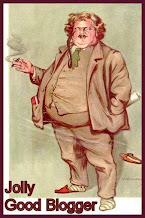
Sørgmodig nok la Gilbert Keith Chesterton ned pennen for godt 14. juni 1936, men han er lykkelig og levende tilstede som ingen andre i sine skrifter.
Selv om han ruvet som få i sin levetid, er det godt å se at stadig flere begynner å forstå at formatet også i ettertiden handler om mer enn det fysiske.
Som i The Telegraphs omtale av den nyeste - og muligens beste - biografien som har fått kommentatoren Christopher Howse til å tenke nytt om en han før bare hadde en nærmest klisjeaktig oppfatning av.
I had previously taken Chesterton for a methodic optimist, determined to face down nihilism, to which he had experienced horrifying exposure when an art student at the Slade. But thanks to the excellent new biography by Ian Ker (reviewed in today's books pages) I realise that Chesterton saw optimism as worse than a half truth.Og det hele handler om apetitten for ting. For noe mer enn abstraksjoner og universialier, for den rene gleden over alt - hver eneste lille ting - som eksisterte. Ingen kunne som ham skrive om Tremendous Trifles og Running After One’s Hat samt All Things Considered for ikke å glemme hva han fant i sine av naturlige årsaker heller romslige lommer.
In 1907, the year before the publication of The Man who was Thursday, he wrote an introduction to the biblical Book of Job. There, God "knocks down pessimists and optimists with the same hammer".
As Chesterton grew older he seemed to find a greater, not a weakening intellectual appetite for things. In 1933, three years before his life ended, he wrote St Thomas Aquinas, his least likely masterpiece.Og nettopp Aquinas klarte å forene rasjonalitet og sanseerfaringer, tanker og ting.
He had made no systematic study of philosophy, but he tore from the writings of Aquinas something he had long before seen in Browning and Stevenson. He found the mind of Aquinas "soaked as with sunshine with the warmth of the wonder of created things".
"It was his special spiritual thesis that there really are things; and not only the Thing; that the Many existed as well as the One," he wrote. "Things to think about, and especially things to prove, to experience and to know." If Aquinas passionately believed in reason, he also maintained that "everything that is in the intellect has been in the senses".Dette motvirket tendensen til å se åndelige sannheter, for ikke å si en åndelig virkelighet som det egentlig reelle, altså fristelsen som ligger bak alt som heter platonisme og gnostisme - og følgelig mye New Age.
Chesterton finds in Aquinas an antidote to a kind of Platonism that would "abandon the body in despair". Plato might despise the flesh "but God had not despised it". The definitive displacement of nihilism comes with the Incarnation, which turns the world the right way out.Det er uklart i hvilken grad andre makter å medvirke til dette prosjektet, men undertegnede er i det minste intervjuet i Dagen (ikke i nettutgaven) i anledning dagen.
Vi løfter glasset mot nærmeste bagatell, i takknemlighet.